Archive for November, 2009
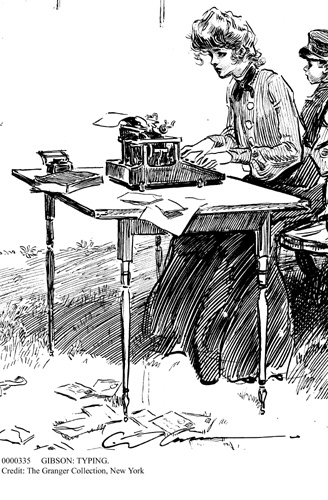
The concept of the bachelor girl (or girl bachelor, woman bachelor, in common vernacular of the day) was an extension of the New Woman, both of which equally frightened traditionalists and gender divisions at the turn-of-the-century. As seen in a previous post, the girl-bachelor was seen as “a ‘comfortable creature’ and a ‘clever nest-builder.’” Where the New Woman was usually of the upper middle-class, college-educated and in the workforce to assert their independence, the bachelor girl was strictly a middle- and lower-middle class phenomenon. They may have a college education (more likely training in a trade, such as typing or minor bookkeeping), but many were just your average shopgirl, telephone exchange operator, hat-check girl, and so on. The Bachelor Girl needed to work, but her precarious financial status did not preclude her from equal independence.
The first concern of the working bachelor girl was housing. Due to the stigmas placed on unmarried women, it was difficult for a single girl to find agreeable housing that was both amenable to her unmarried state and would protect her from unwanted advances. The issue was most acute in New York city, where women were barred from taking hotel rooms and most boarding houses were for “Gentlemen Only.” When a bachelor girl did find a suitable candidate, their morals, family background, religious practices, and romantic relationships were intensely scrutinized by the landlord.
A 1903 article in The American Monthly Review of Reviews:
“One of the model tenements erected in New York several years ago was set aside for self-supporting women. Forty out of forty-five apartments in this building, of one, two, or three rooms each, with an average rental of ninety-three cents per room per week, are occupied by unattached women, most of whom are breadwinners with moderate salaries, including nurses, teachers, clerks, dressmakers, and literary workers.”
In 1906, there was one hotel which catered to bachelor girls, but the hurdles a girl had to jump through to obtain housing led most working women to band together with two or three others of their similar dilemma and rent a flat. These could be had rather cheaply, but small, and bachelor girls needed to be inventive to survive the sharing of a tiny flat with two other girls. Out of this necessity the chafing dish became extremely popular with single women and men. The chafing dish, a copper or steel brazier, could cook practically any dish with little fuss and in a simple manner. Dozens of cookbooks devoted sections to chafing-dish recipes, and even more cookbooks were created specifically for the chafing dish. In this contraption, eggs and bacon could be made for breakfast, grilled sandwiches for luncheon, and braised kidneys and rice for supper. Other options for eating were the numerous tea shops studding the city, or the Childs Restaurants, which catered to office workers in downtown Manhattan, and by the 1910s, Horn & Hardart’s automats began to appear in the northeast’s major cities.
Housing, however, was of little issue in England, as the average bachelor girl remained at home or took lodgings in the apartment houses built for females, of which there were four large ones in London: Oakley Flats in Chelsea, the Chenies Street Chambers, the York Street Chambers, and Sloane Gardens House. These apartments were moderate and elegant, possessing gardens in abundance, and ranging from highly private, where there were no common rooms, to wide-open, with many common rooms and areas for meeting and the posting of London-based activities. The tenants of these apartments had full independence: a latch-key of their own, the ability to come and go when pleased, to invite male and female friends to tea, and host parties.
Bachelor girls on either side of the Atlantic were nonetheless plagued by the “Marriage Question.” Many critics of growing female independence worried that as club-life disinclined men to marry, apartment life disinclined women to marry, which would lead to a decline in the birth rate, and disintegrate family life and the social structure! The real fear over the bachelor girl was the state of her morals: a woman alone could engage in illicit relations with men and thus enjoy experiences formerly reserved for married women.
The bachelor girl also earned an education. Into the bookstalls came a number of titles to help single women find employment and housing, to learn how to deal with male co-workers and employers, how to feed, clothe and furnish herself and their living space, and more importantly, how to earn and budget their money–an important advancement at a time where women were expected to depend on their male relations or their husbands for money, and were frequently unable to open bank accounts; and when permitted, newspaper articles poked fun at the outliers as being the norm (such as women forgetting to sign their checks, or overdrawing their accounts, or apparently increasing forgery by sending their servants to withdraw and deposit money for them).
Though the issues of marriage, love, and gender roles do remain, the bachelor girl, and the New Woman with her, despite the forces against them, were a fount of resilience. Their lot may not have been glamorous or immediately rewarding, but their trials and tribulations, as well as their triumphs, paved the way for women of today.
Further Reading:
Bachelor Girl: The Secret History of Single Women in the 20th Century by Betsy Israel
The Business Girl’s Budget by Clara Ingram Judson
The Business Girl in Every Phase of Her Life by Ruth Ashmore
Training the Girl by William A. McKeever
The Bachelor Girl’s Guide to Everything: The Girl On Her Own by Agnes M. Miall
For the unmarried gentleman of high society, the world was his oyster. At no other time in history was bachelordom such a widespread, and pleasurable, pursuit. As the turn of the century dawned, the “Marriage Question” began to shift from the issue of surplus women, but on why men refused to marry! Certainly England’s system of primogeniture pushed penniless second, third, fourth, and beyond sons out into the far and wide outreaches of the British Empire, but that failed to explain why eligible men who remained at home were content to dash from cricket match to club to house party to hunting grounds with nary a thought to acquire a spouse.
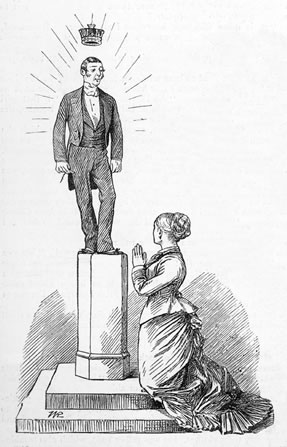
In his text, The Age of the Bachelor: Creating an American Subculture, Howard P. Chudacoff argues that the bachelor subculture grew from the growing spaces created specifically for the consumption and entertainment of men–bars, taverns, barber shops, clubs, et al. I would add that men became more entrenched in their bachelordom in reaction to the increasing independence of women (the Bachelor Girls of next week’s post), which poked holes in the “normal” gender interaction of previous generations. The more women moved into traditionally masculine spheres, such as higher education, medicine, law, and other white-collar positions, which also thrust these marriageable women beneath their noses, the more men retreated behind barriers which would relieve the pressure of buckling gender barriers. Now men had to navigate social interactions with intelligent, independent and unmarried (and ostensibly unprotected females who would have formerly been
considered fair game) women, yet social norms maintained the thought that women needed the protection and security a husband would provide. With a female coworker of marriageable age and reasonable attractiveness at the next desk, males no longer had the buffer of “work” to separate them from the proscribed times for courtship.
Out of this desire for a purely masculine domain first came the bachelor apartment. Prior to the 1880s, bachelorhood was regarded as “a mere temporary condition [...] a sort of interregnum between youth and sober, well-ordered manhood.” Unmarried men lived frequently in boarding houses, and not infrequently married the land lady’s daughter or the widow who sat across from him at meals. As concepts of the unmarried state changed by the end of the nineteenth century, the pressure for apartment houses built expressly for the residence of a bachelor grew, and the most luxurious apartment homes sprang up across New York practically overnight. These ran from fifteen hundred dollars per year for the most up-to-date plumbing, large rooms and meals delivered by a housemaid, to modest affairs of eight hundred to one thousand dollars (but always with plumbing!). London also joined the bachelor apartment, though on a more subtle scale, as the apartment blocks were built near or around Westminster, which was a typically masculine area of the Town. Ironically enough, the rise of the bachelor apartment ushered in a fad for dinner parties where unmarried men and women could mingle in a manner quite independent of chaperons or one’s parents.
However, the bastion of bachelordom–perhaps man in general–was the club. English clubs of course dated from the 17th and 18th centuries, but the late nineteenth century saw an explosion of gentleman’s clubs on both sides of the Atlantic (and the Channel) formed by all manners of men and groups. First and foremost were the political clubs of London: Brooks (Liberal/Whig), Carlton (premier Conservative club), Junior Carlton, and the Reform. The military, which had clubs for every branch and rank (Guards’, Army and Navy, East India United Service, etc), the artistic (Athenaeum for the literati; Garrick for actors; Authors for authors, et al), the sporting (Automobile, Royal Thames, Hurlingham, etc), and social/general clubs, the most famous being White’s, Boodle’s the Junior Athenaeum, the Marlborough (formed by Edward VII when Prince of Wales), and Travellers’.
In New York, under the aegis of J.P. Morgan, the city’s most powerful and most prominent men formed the exclusive Metropolitan Club, which, along with the Knickerbocker Club and the Union Club, were the most luxurious and coveted clubs in America. Here clubs were formed along interest lines, but unlike London society, the literati and the theater world did not mingle with the wealthy society men, and bachelors were less likely to use the men’s club as an escape from women (though this attitude declined as more English traits were adopted).
The bachelor life was most amenable to the fast-paced world centered around the theater. Gaiety girls, showgirls, chorus girls, and spectacles galore, tempted the bachelor with deep pockets and even deeper cups. In London, young bachelors–most of them military men–didn’t consider themselves men if they weren’t chucked from the Empire Theatre on Leicester Square at least once in their lifetime. Broadway was a bit more seductive, as the theater district abounded with naughty music halls and even naughtier cabarets. Here, the lobster palace society, the venue of the “butter-and-egg man” reigned supreme, and where luscious, giggling chorus girls, primadonnas, and grande dames of the stage, were wined and dined all night long. One cannot deny, however, that Paris was the destination for the bachelor who wanted to have fun with adventurous women, and among other places, such as the high-class brothels which catered to every taste, Maxim’s was the center around which Paris’s le high life formed. The food was excellent, but the service was even better, with the staff prepared for any activity in which its patrons could get into–even when Russian Grand Dukes doused the lights and began playing Russian roulette. Unlike the restaurants catering to the faster sets, Maxim’s was strictly for courtesans and gentlemen, and no respectable woman would dare enter its portals, much less recognize its existence.
The bachelor life was dangerous though, and the married men who indulged in its excesses were apt to find themselves on the receiving end of public outrage–as with the infamous Pie Girl Dinner–or, well, dead (Stanford White!). Ultimately, the life of the bachelor was so utterly sublime–girls, champagne, sports–it was a wonder why any gentleman of wealth and rank married at all! However, as worrisome as the growing numbers of bachelors were to society, the most worry was saved for that frightening, independent, “masculine” entity: the Bachelor Girl.
Further Reading:
Belle Epoque: Paris in the Nineties by Raymond Rudorff
Edward and the Edwardians by Phillip Julian
The Pursuit of Pleasure by Keith Middlemas
American Eve: Evelyn Nesbit, Stanford White The Birth of the ‘It’ Girl, and the ‘Crime of the Century’ by Paula Uruburu
Gilded City: Scandal and Sensation in Turn-of-the-Century New York by M.H. Dunlop
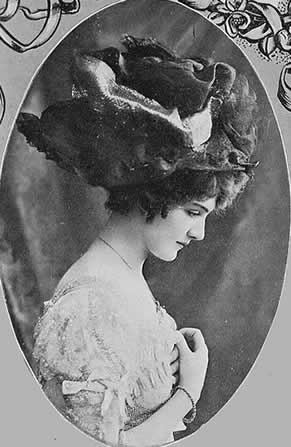
The Edwardian era was home to many fads and fashions which hearkened to bygone days, and the Merry Widow hat craze was no exception. The hat was just another part of the costume designed by Lucile for statuesque English theater star Lily Elsie, who was to play the main character, Hanna Glawari, in the 1907 English adaptation of Franz Lehár’s operetta, Die lustige Witwe. The play was an immediate sensation, and its wonderful, frothy signature tune, the Merry Widow Waltz, became the craze of the Season. However, it was the hat worn by Elsie, that black, wide-brimmed, hat covered with filmy chiffon and festooned with piles of feathers, became the look for fashionable women over the next three years.
The hat, reaching such widths as eighteen inches, and topped with all kinds of trimmings (even whole stuffed birds!), was a direct descendant of the “Gainsborough” hat worn by the Duchess of Devonshire in that artist’s portrait of the famed Georgian beauty. It’s resurgence was quite timely, as the silhouette of the Edwardian lady moved away from the languid, S-curve of the early 1900s to the streamlined, athletic look of the late 18th century/early 19th century. Predictably, the increasing fashion for this hat resulted in endless jokes in popular magazines like Punch, whose issues frequently poked fun at the difficulties one could get into when wearing a Merry Widow hat or being near a lady wearing one. In New York, the Merry Widow craze extended to not only the hats, but corsets, dogs, cigars, chocolates, perfumes, scallops, liqueurs, et cetera, and early American film companies rushed to produce snappy one-reelers based around “merry widows” in Merry Widow hats to cash in on the hat and the operetta’s popularity.
The Merry Widow retained its popularity until the eve of World War One, though it vied for supremacy with the smaller toques and turbans made popular by Paul Poiret. Surprisingly, the operetta and the waltz composed for it remain quite popular, with revivals occurring quite frequently. As for Franz Lehár, this one operetta made him a multimillionaire, and his career was never the same.
Further Reading:
Accessories of Dress: An Illustrated Encyclopedia by Katherine Morris Lester, Bess Viola Oerke & Helen Westermann
Hats: a history of fashion in Headwear by Hilda Amphlett
The “it” girls: Lucy, Lady Duff Gordon, the couturière “Lucile”, and Elinor Glyn by Meredith Etherington-Smith & Jeremy Pilcher